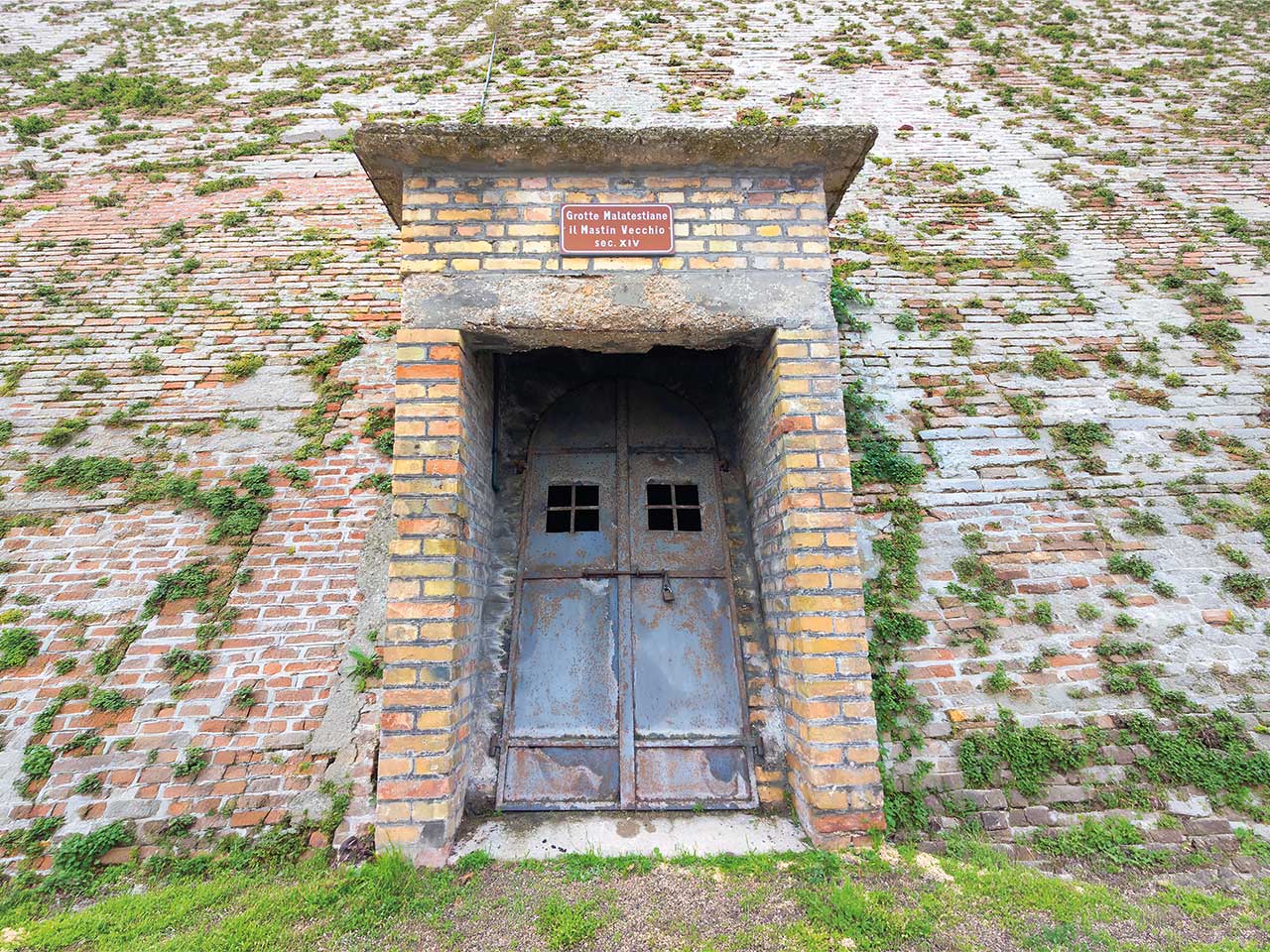
MALATESTIAN CAVES
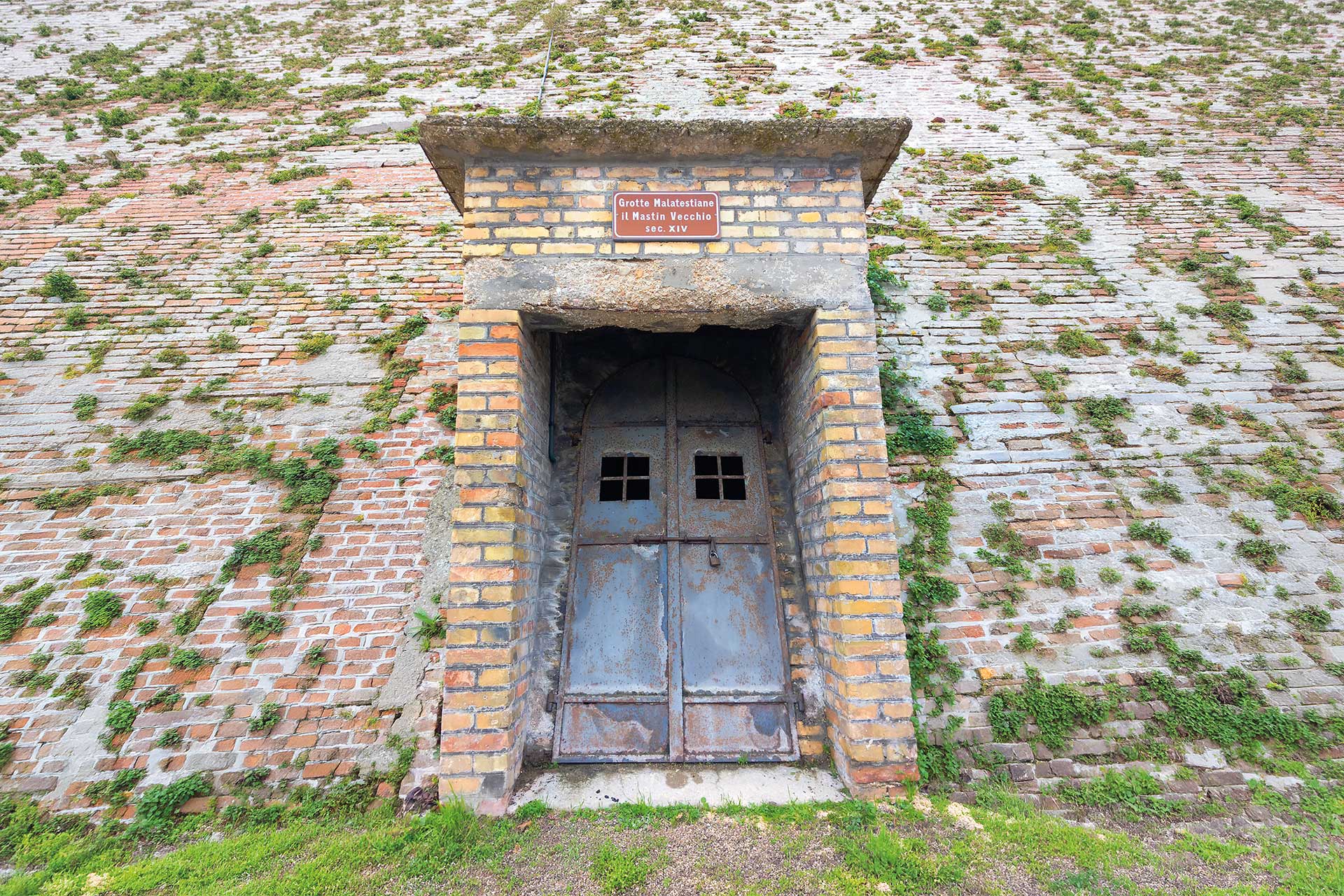
The so-called “Malatesta Caves” of Castel Colonna, a hamlet in the Municipality of Trecastelli, are ancient underground passageways attributed to the Malatesta period, later converted into an air-raid shelter during World War II. These tunnels originally served as cellars and storage spaces for grain and other agricultural products, connected to the medieval sharecropping system known as mezzadria tumbaria. From this term derived the ancient name of the place, “Tomba” or “Tomba of Senigallia,” which referred to a fortified farmstead.
In 1943, the local population adapted these underground spaces to create an air-raid shelter. A trapdoor was opened in the main square, accessible via three steep stairways, leading to a main gallery with an exit on the south-western side, at the base of the castle walls. A secondary branch led to another escape route into the moat below the village, but this was closed in the 1960s due to structural instability. The shelter was also equipped with a well for water supply.
During the war, the village was bombed by both German and Allied forces; when the siren sounded, the underground tunnels provided protection, saving many lives. After the front lines moved on, the gallery was extended near the well, with a new exit opened on the north-eastern side. It was also lit to allow underground passage across the village, but this route was closed again after only a few years. In the 1990s, the caves were briefly reopened to the public as a tourist attraction before being closed once more.
The name “Malatesta Caves” derives from Mastin Vecchio (14th century), a title evoking the Malatesta era and, in particular, Malatesta da Verrucchio—known as “Mastin Vecchio”—father of Pandolfo I and founder of the dynasty. In reality, Malatesta rule over Senigallia and its castles, including ancient Tomba, was consolidated mainly in the 15th century, with figures such as Carlo II Malatesta and his wife Vittoria Colonna (niece of Pope Martin V). She is credited with the construction of the entrance tower (or fortified gate).
The current name “Castel Colonna” was officially adopted in 1921 in honor of Vittoria Colonna. Her feast day is celebrated on July 17 and was once marked by grand festivities, attended by the bishop and local authorities.
Gallery
Wherein
More info
Categories
Monumento, Storico