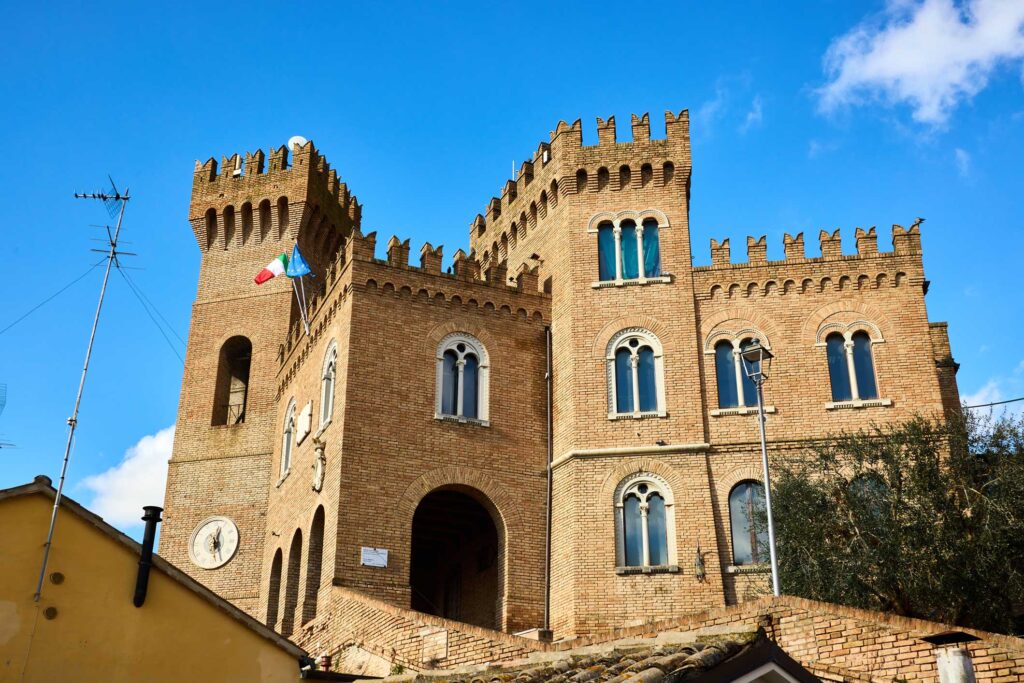
The itinerary dedicated to Nori De’ Nobili, an artist of intense life and refined talent, unfolds across the three villages that make up Trecastelli: Ripe, Castel Colonna, and Monterado. These are places where culture, memory, and landscape blend together in harmonious balance.
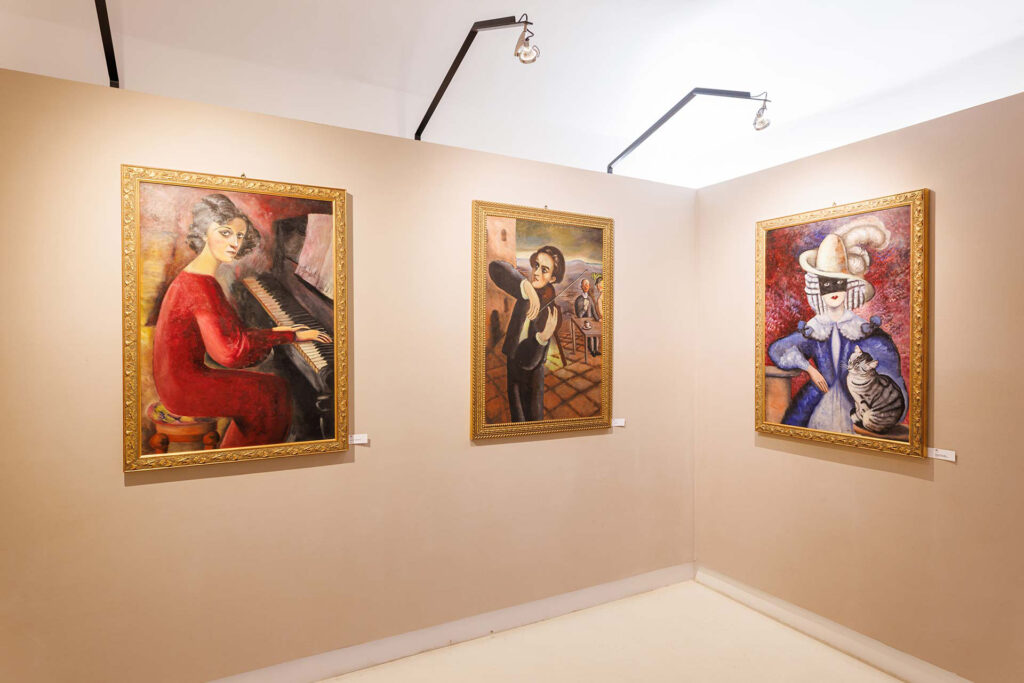
Romualdo Villa and Nori De' Nobili Museum
Villino Romualdo: A Cultural and Social Hub in Trecastelli Situated in the picturesque village of Ripe, in the municipality of Trecastelli, Villino Romualdo is an elegant 19th-century building that combines history, culture and community service. A private residence until 1946, it was donated to the community by Nazareno Sceral and designated for social and cultural purposes. Today, the villa houses the Nori De’ Nobili Museum, one of the world’s most significant spaces dedicated to a female artist, and offers a range of essential services for the local community. Inside, it accommodates medical clinics, a music school, the municipal library and the Centre for Studies on Women in Contemporary Visual Arts, a key reference point for women’s art and its representations. The Nori De’ Nobili Museum and the Research Centre Opened in 2012, the Nori De’ Nobili Museum is dedicated to the painter Eleonora De’ Nobili, known as Nori, and houses over sixty works that trace her artistic development and her troubled life. The museum is also home to the Centre for Studies on Women in Contemporary Visual Arts, established to promote research into women’s art. The centre organises exhibitions and events of national and international significance, strengthening the link between artistic tradition and contemporary reflection on the representation of women in art. Villino Romualdo is thus not merely a repository of history, but a hub of living culture, uniting past and present in a unique experience for the public and the community.
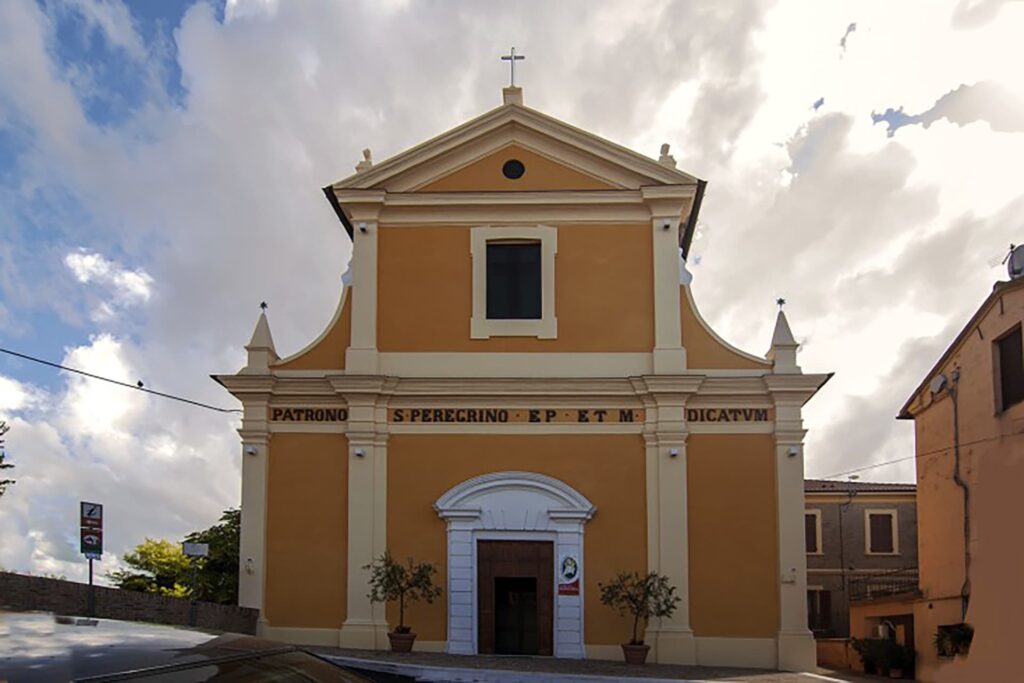
Church of San Pellegrino Ripe
The Church of San Pellegrino, situated at the entrance to Ripe, was built between 1781 and 1785 to replace an earlier religious building. Its history dates back to the 11th century, with a parish church followed by successive reconstructions leading up to the present structure. Dedicated to Saint Pellegrino, bishop and martyr, the church also houses the relics of Saint John Paul II. The building features a two-storey façade and a side bell tower. The interior, with a central nave flanked by two side aisles, houses notable works of art, including a 15th–16th-century painting of the Madonna del Carmine and a 17th-century wooden crucifix. Several chapels enrich the sacred space, such as the Chapel of the Crucifix and those dedicated to the Virgin Mary. With its historical and artistic heritage, the Church of San Pellegrino stands as a cultural and religious landmark for the community of Ripe.
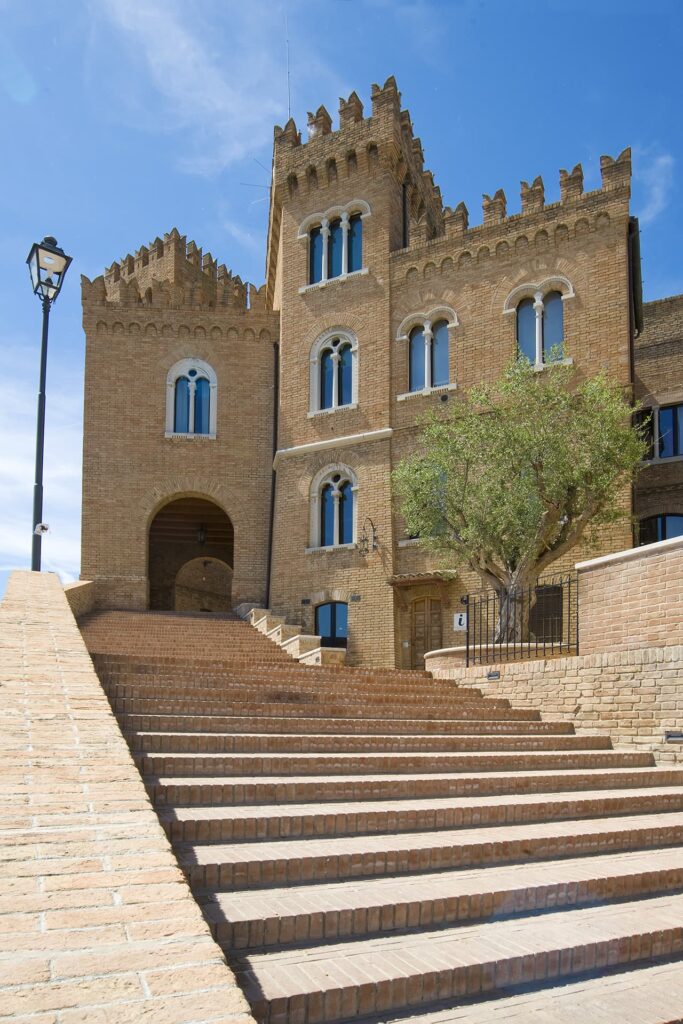
Town Hall of Ripe
Ripe Town Hall stands on the ruins of the parish house, which was demolished in 1937, and was inaugurated in 1938. Designed with medieval architectural features, including Guelph-style battlements and an adjacent civic tower, the building met the town’s administrative needs whilst blending harmoniously with the historic setting of the village. The construction represented a significant urban regeneration project, enhancing the Castle area and blending into the local historic fabric.
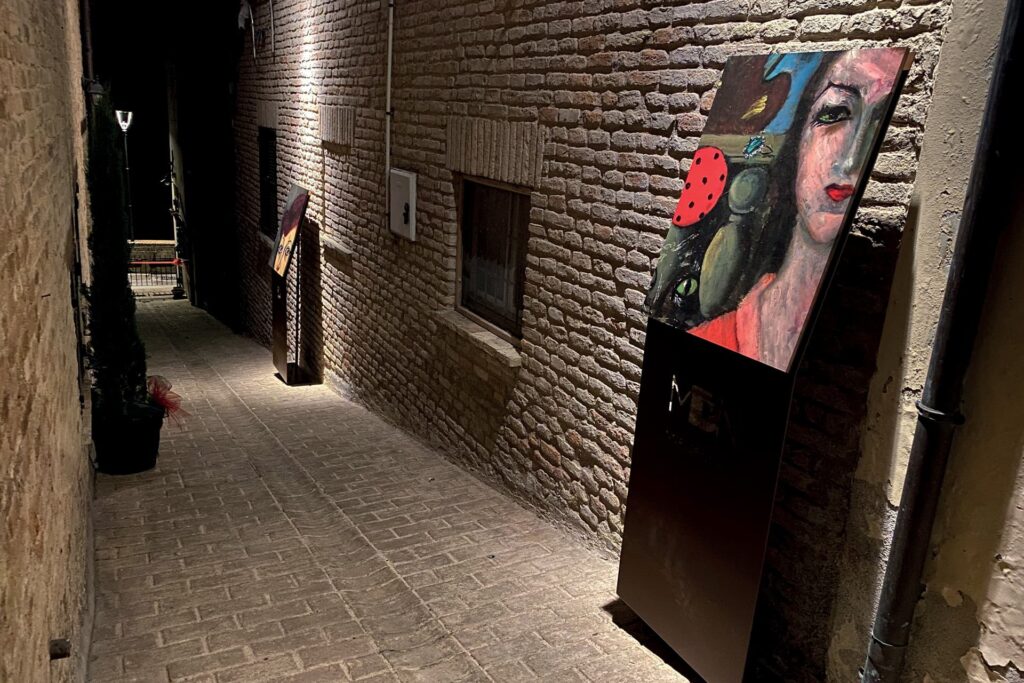
Streets dedicated to Bugatti and De Minicis
The alleyways named after Carlo Emanuele Bugatti and Giuliano De Minicis, located in the historic centre of Trecastelli, are an important testament to the village’s culture and history. Recently renovated, they now house an open-air museum featuring reproductions of works by the artist Nori De’ Nobili, creating a route that combines art, history and the urban landscape.
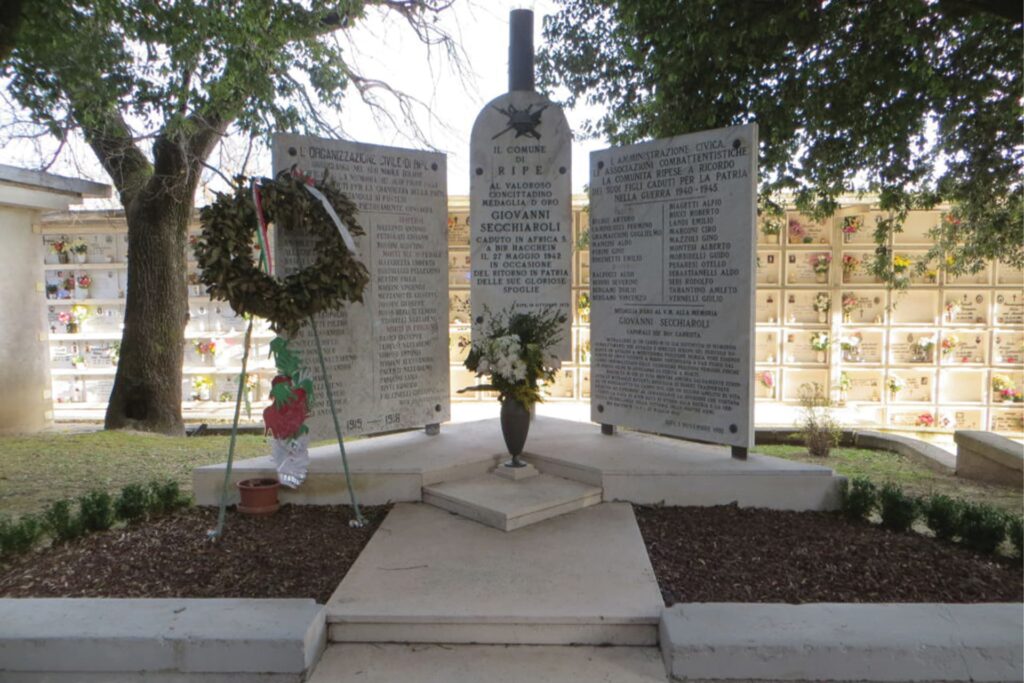
War Memorial in Ripe
The Ripe War Memorial, located in the tower of the town hall, commemorates the soldiers and civilians of the two world wars. Protected by a wrought-iron gate, it houses marble plaques and a scroll dedicated to Giovanni Secchiaroli, recipient of the Gold Medal. The site is a significant example of architectural restoration and an important landmark of historical memory for the community. The Ripe War Memorial is a place of great historical and cultural significance, dedicated to the soldiers and civilian victims of the two world wars. Situated within the tower of the town hall, the memorial was incorporated into the building’s new base during renovation works. A brick arch and an elegant wrought-iron gate, decorated with symbols of war such as daggers, helmets, eagles and shields, mark the entrance. Inside, four marble plaques commemorate the fallen, whilst a cartouche honours Giovanni Secchiaroli, recipient of the Gold Medal. Although almost hidden by the imposing castle, the chapel is a fine example of architectural restoration, as well as being an important place of remembrance for the community
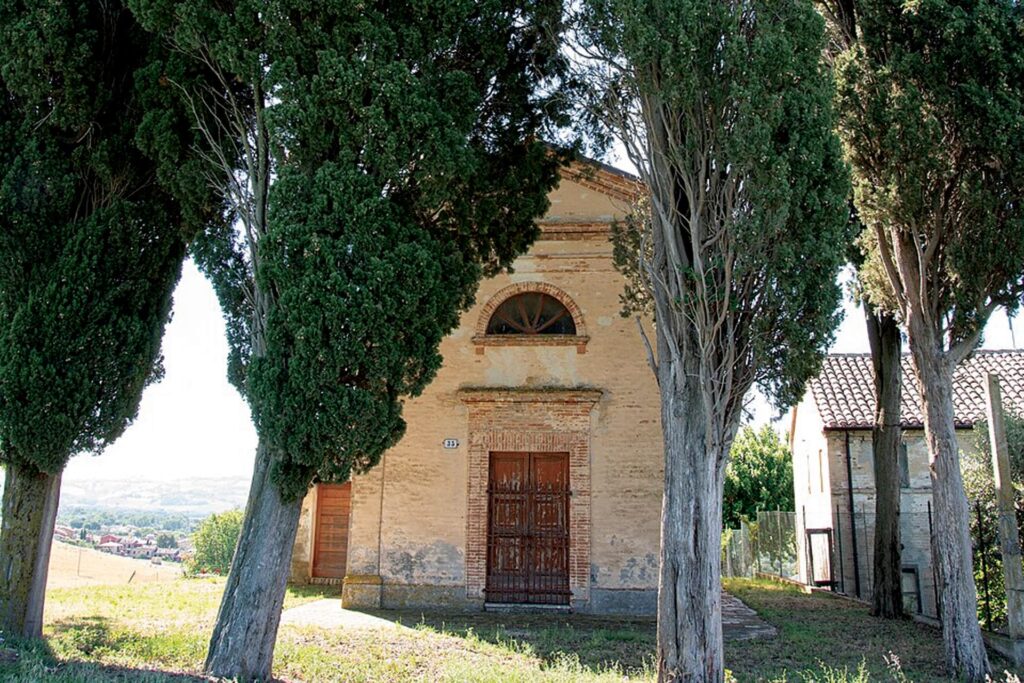
Church of Crocifisso
The Little Church of the Crucifix, situated near Ripe, has a history that traces its roots back to the Abbey of San Ginesio in Rocca Contrada (now Arcevia). In 1879, the Lavatori brothers acquired the land on which a ruined chapel once stood, and in 1881 they rebuilt it from the ground up. The church, still owned by the Lavatori family, retains a bell tower, a private burial ground and numerous sacred furnishings, including a Missal Romanum from 1872. Every year, during Easter, a festival is held in honour of a painting of the Madonna kept inside.
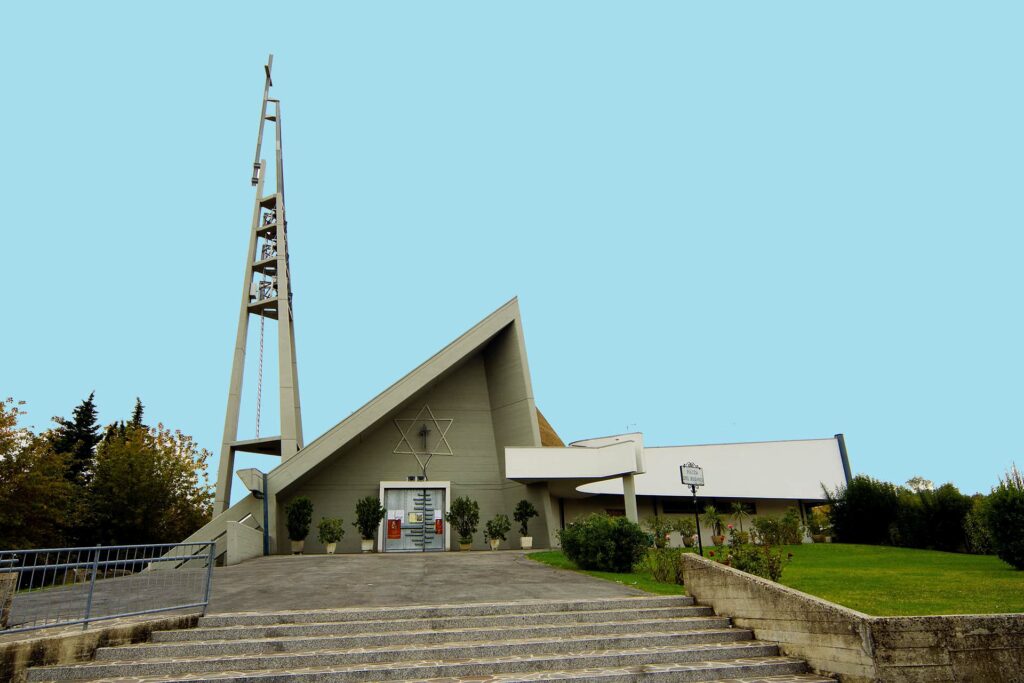
Church of Madonna del Rosario
Built in 1977 to a design by Prof. Gabriele Bonazza, the Church of Our Lady of the Rosary stands in Passo di Ripe to meet the needs of a growing community. Inspired by Abraham’s tent, a biblical symbol of hospitality, the modern architecture blends with a rich symbolic and artistic vocabulary. Among the most significant elements are the Tabernacle, evocative of the pillar of fire in the desert; the Baptismal Font, sculpted like a rock from which the water of salvation flows; and a Way of the Cross with additional scenes created by Bonazza himself. The church also houses works by Aleandro Memè and the Ortisei school, making it an important spiritual and cultural landmark for the local community.
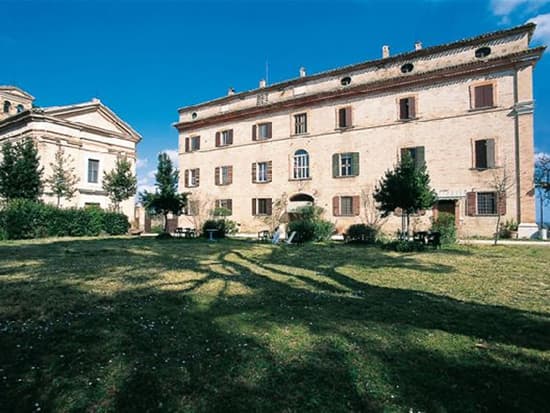
Antonelli Castracani Augusti Palace
The Palazzo Antonelli Castracani Augusti, known as the Palazzo delle Cento Finestre, is a historic noble residence situated in the hills of the Misa Valley. Built by the Counts of Antonelli, the palace was transformed in the 18th century by Cardinal Nicola Antonelli and designed by the architect Andrea Vici. Inside, there are frescoes by Felice Giani and a church designed by Vanvitelli. Today, the palace hosts cultural events and the Antonelli Study Centre, and can be visited by appointment.
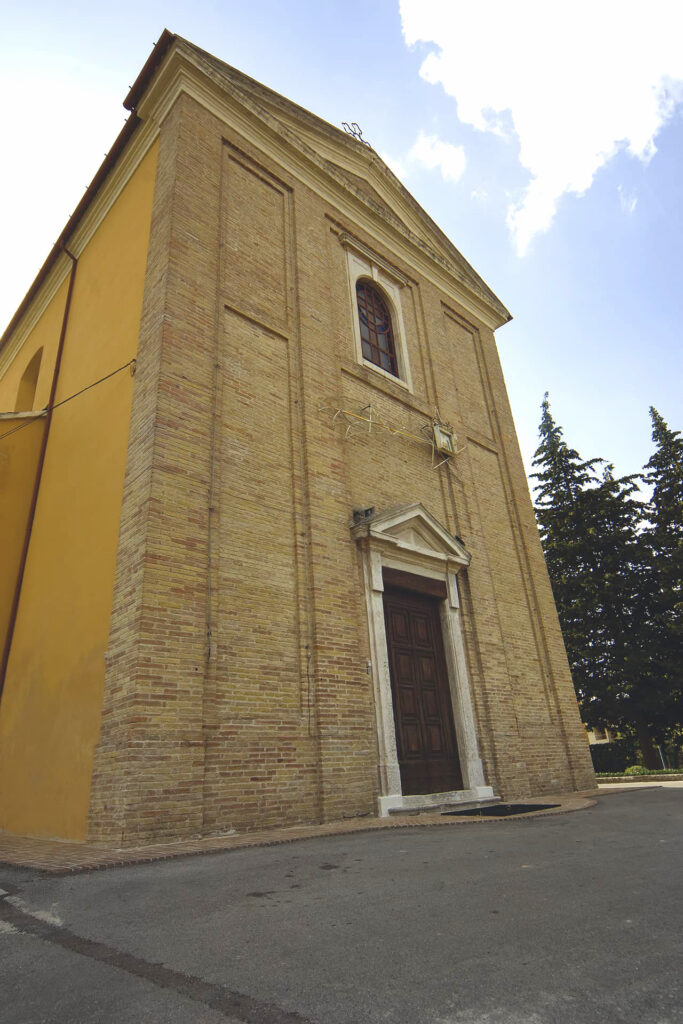
Church of San Michele Arcangelo
The Church of St Michael the Archangel, located in Brugnetto, is an important monument that combines art and history. Originally built in the Middle Ages, the church has undergone several reconstructions over the centuries, including post-earthquake restoration work. Inside, there are works of art of great value, such as the altarpiece of St Michael, the Crucifix and the Madonna del Rosario, all created by anonymous 18th-century artists. The church is also decorated with frescoes by Marcantonio Bedini. A place that represents the faith, devotion and history of the community of Brugnetto.
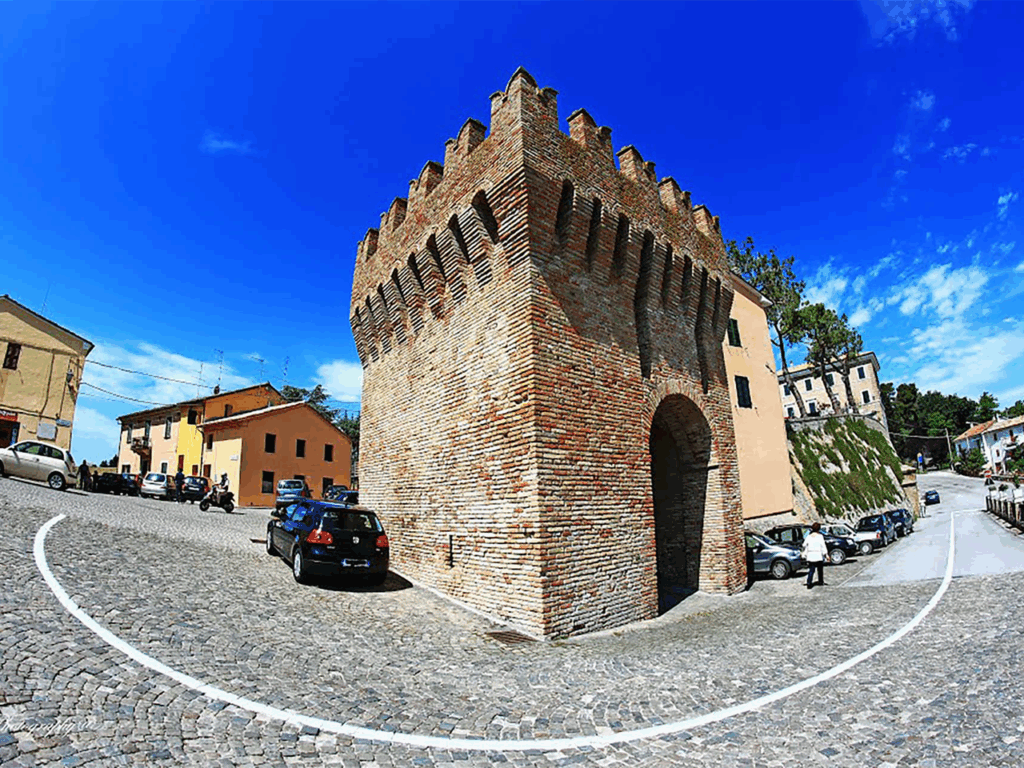
Malatesta Tower of Castel Colonna
The Malatesta Tower at Castel Colonna, built in 1457 by Vittoria Colonna, is a fine example of Malatesta military architecture. Originally designed as a fortified entrance to the castle, it has undergone various restorations over the years, whilst retaining original features such as the entrance arch, the machicolations and a commemorative plaque. The structure reflects the defensive strategy of the period and serves as a symbol of the village’s identity.
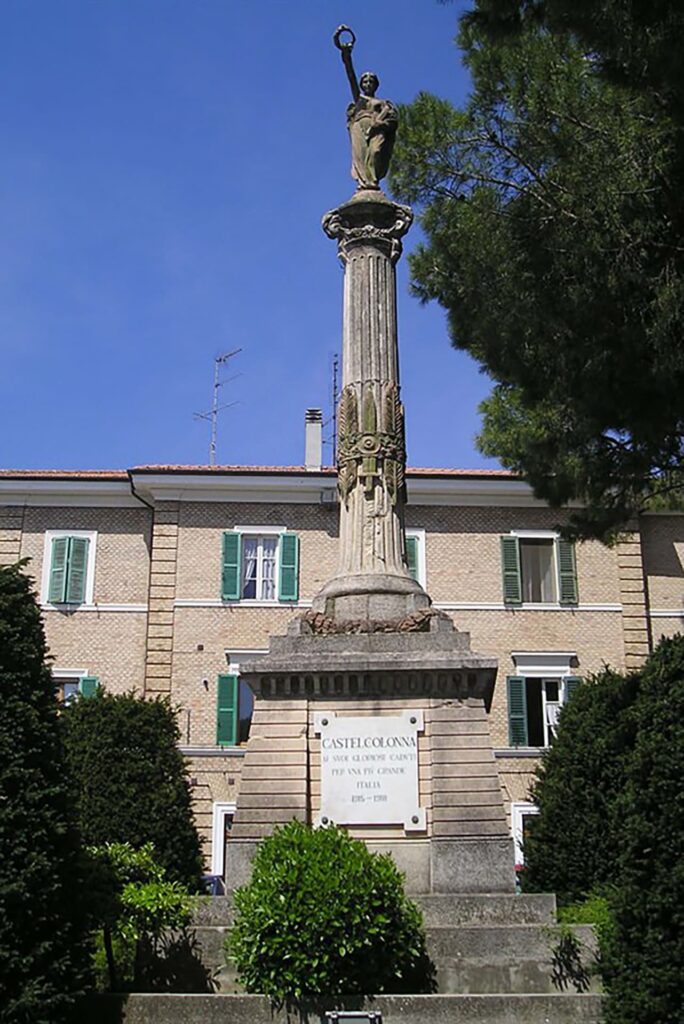
War memorial Castel Colonna
Located in the central Piazza Roma, the Castel Colonna War Memorial is one of the town’s most significant historical landmarks, dedicated to the soldiers who fell during the Great War (1915–1918). Created by the sculptor Nicola Lucci in the early 1930s, the monument combines sculptural and architectural elements that highlight its symbolic and historical significance.
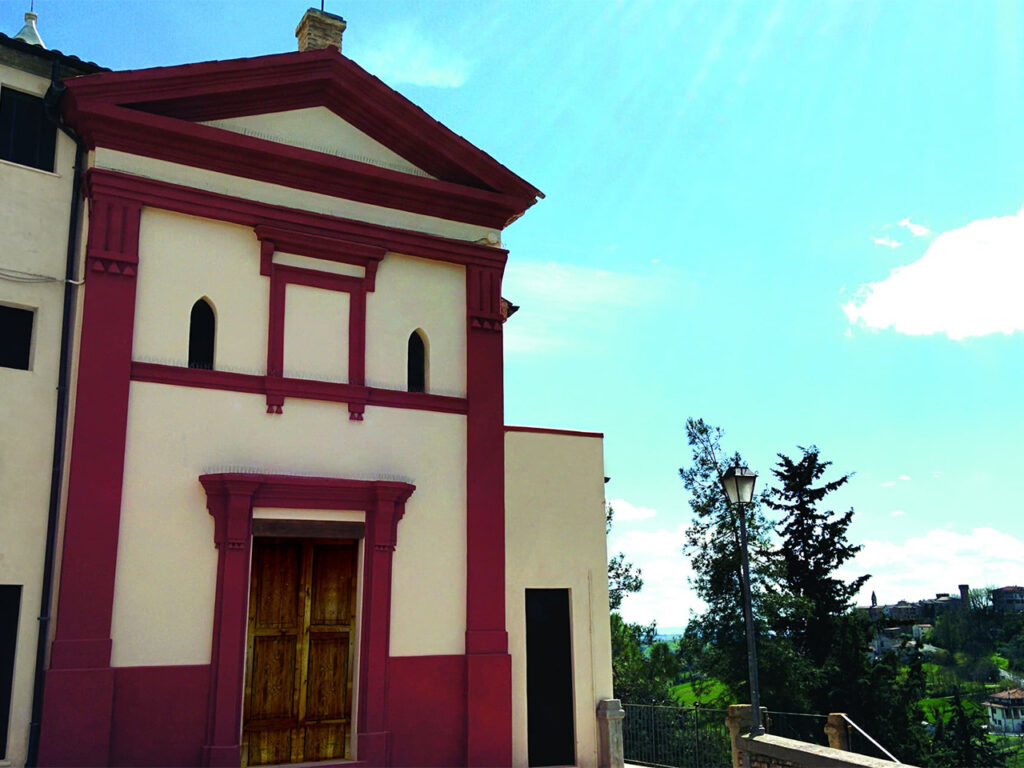
Church of San Mauro Abate
The church of San Mauro Abate, located in Castel Colonna, dates from the 16th to the 17th century and was built during the rule of the Della Rovere family. The building underwent extensions in 1920 and a conservation restoration in 2016. Of particular note are the 16th–17th-century wooden crucifix and works of art such as Gaetano Lapis’s painting of the Madonna della Misericordia. The church, with its three-nave interior, is a place of faith and culture for the community of Trecastelli, bearing witness to a long Benedictine and Marian tradition.
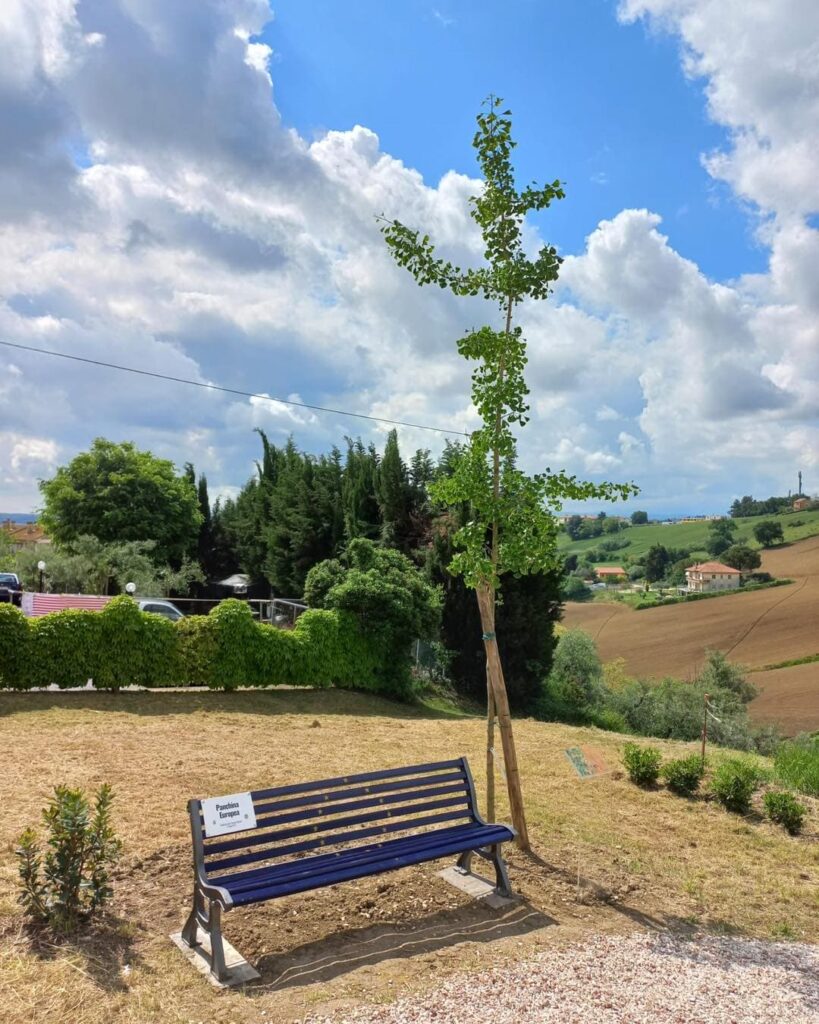
Biodiversity Wood - Educational Park
The Biodiversity Wood and Educational Park, located in Castel Colonna in the municipality of Trecastelli, is a natural space designed to highlight local biodiversity and promote environmental education among residents, schools and visitors. The park is home to a rich variety of native plant species arranged in such a way as to encourage learning about and respect for the natural heritage through an ecological and educational trail. Launched on the initiative of the Town of Trecastelli and partly funded by the ASA Waste Call for Proposals, the project is an example of collaboration between institutions, schools and the community. The park features the European Bench, a symbol of inclusion, participation and unity among the peoples of the European Union. Inaugurated on 10 May 2025 with the participation of Professor Francesco Broccolo and local students, the park welcomes people of all ages for educational activities, outdoor walks and environmental awareness initiatives.
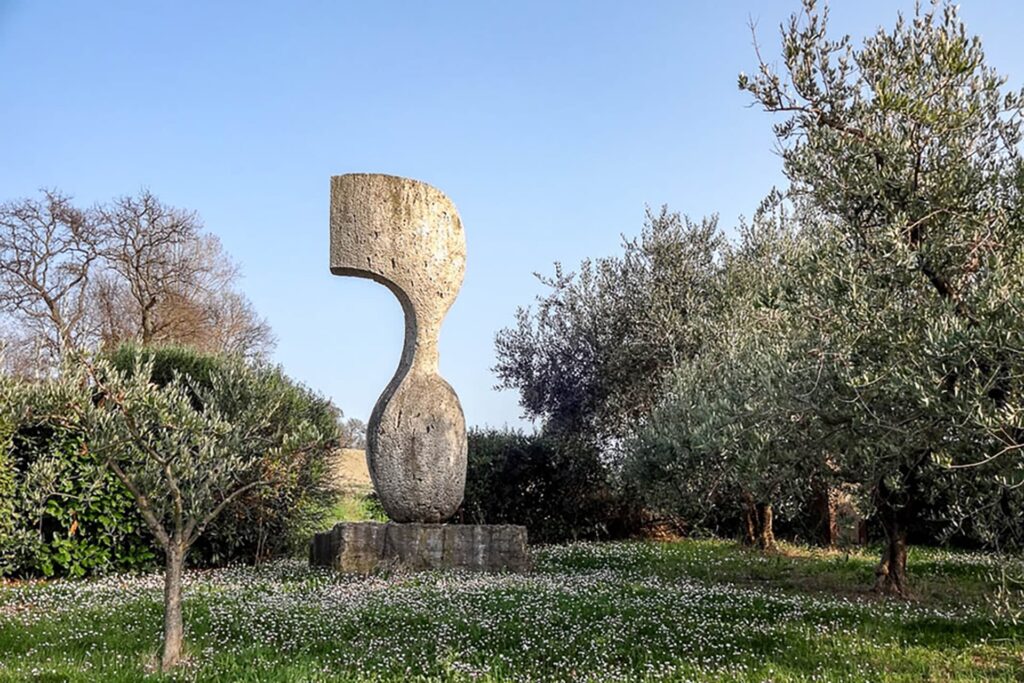
Sculptures by Guglielmo Vecchietti Massacci
La Casa degli Ulivi is an arts and cultural centre situated in the countryside around Castel Colonna, in the Marche region. Founded by the artists Guglielmo Vecchietti Massacci and Isabel Permanyer, it features a garden of sculptures integrated into the natural landscape and a house-museum that celebrates the connection between art, the local area and tradition. The project stems from Massacci’s desire to restore value to his homeland, offering a space open to the community where sculpture becomes a free and profound form of expression. The Casa organises events, workshops and opportunities for sharing, establishing itself as a hub for those seeking an authentic and immersive artistic experience.
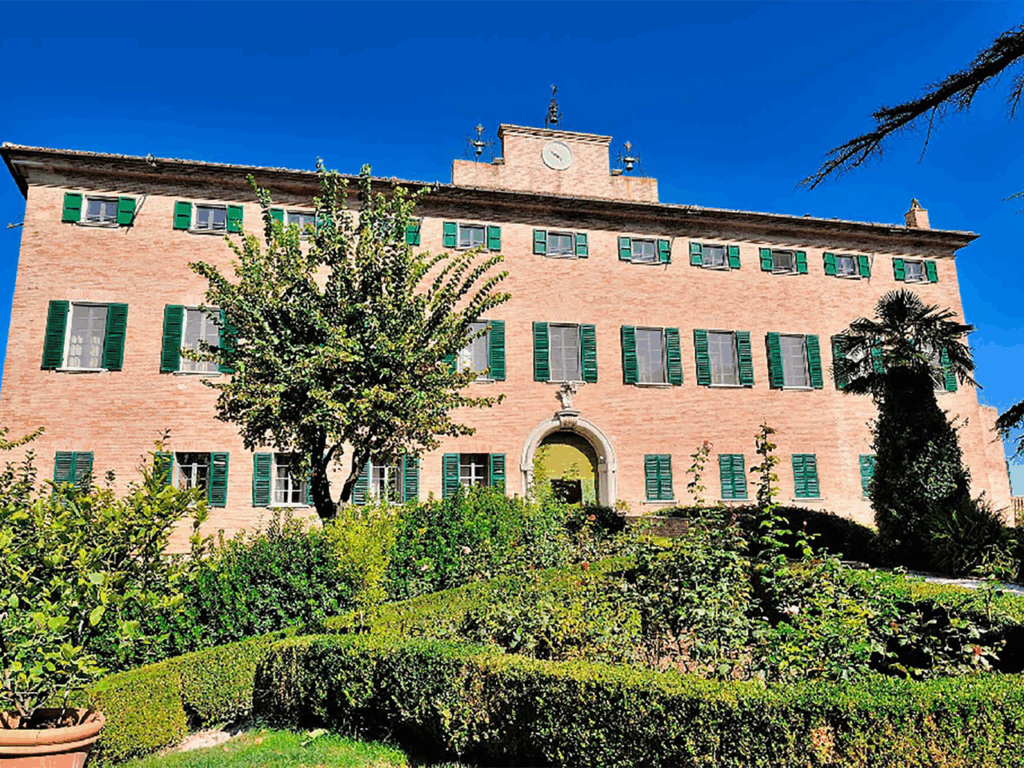
Castle of Monterado
Monterado Castle, situated on a hill in the Marche region, boasts a rich history dating back to 1267. Originally a medieval fortress, it later became a noble residence under the Della Rovere family and, in the 19th century, was transformed by Prince Maximilian of Beauharnais. The castle preserves fine 19th-century frescoes, a splendid chapel and the original architecture, attributed to Luigi Vanvitelli. Surrounded by a vast seven-hectare park, planted in 1846 by Count Cerasi, it offers picturesque walks amongst centuries-old oaks, pines and laurels. Today, the castle stands as a symbol of history, art and natural beauty, offering a unique setting for cultural visits and special events.
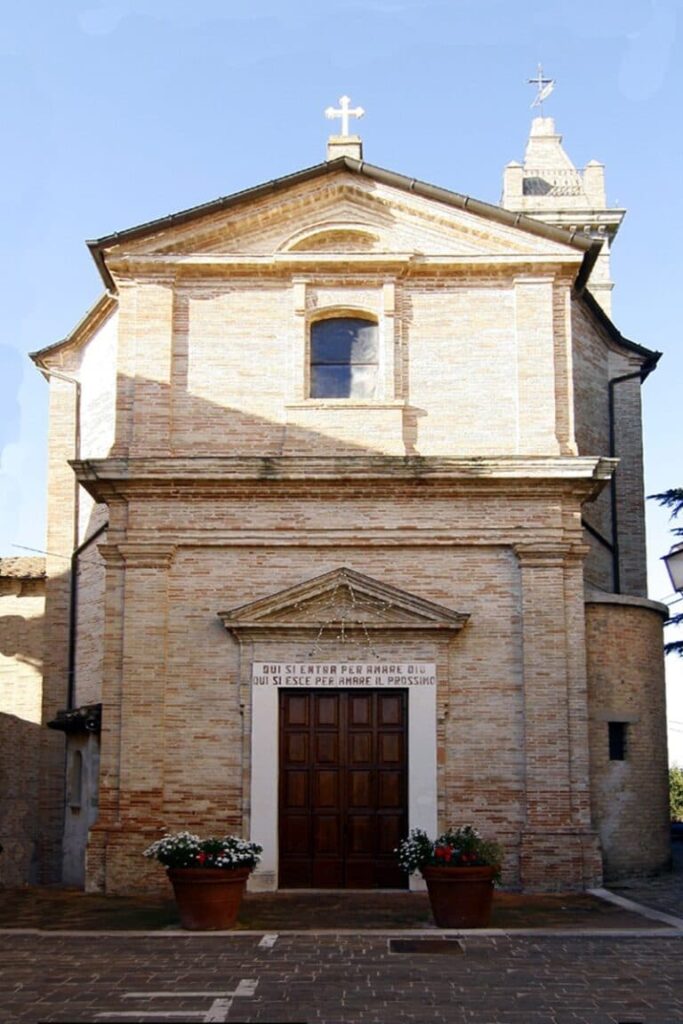
San Giacomo Maggiore Church
Dating back to medieval times, Don Giovanni Battista Zacchilla began the reconstruction of the Church of San Giacomo Maggiore in its present form between 1786 and 1806, and the work was completed by Don Stramigioli in the following decades.
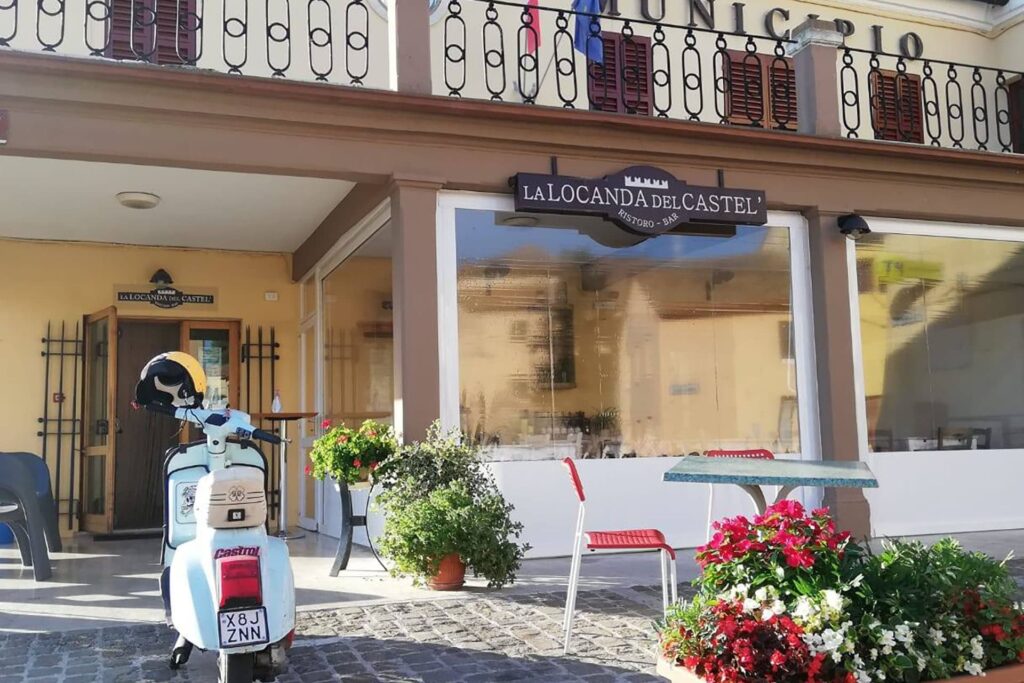
Taste – Trecastelli
During the journey between Ripe, Castel Colonna, and Monterado, while discovering the municipality of Trecastelli, a food and wine stop is a must in order to savor traditional local cuisine in authentic and charming settings. Among the many recommended restaurants are Locanda del Castel, set in a rustic yet refined environment where guests can enjoy typical Marche dishes prepared with locally sourced ingredients, and Tenuta Il Giogo, a farmhouse surrounded by rolling hills and olive groves. Here, visitors can taste the genuine flavors of home-style cooking, with recipes passed down from generation to generation, paired with wines from local vineyards. In these places, dining is not just about eating, but about immersing oneself in a sensory experience that brings together history, nature, and the authentic flavors of the Marche region.
-
“NUOVA ALBA” CIRCOLO PROLOCO
Via Roma 27, Trecastelli, Ancona , 60012 - Tel: 0717959019 -
Caffè Centrale by Jessy Jey
Piazza Leopardi, 30 30, Trecastelli, Ancona, 60012 - Tel: 348 914 9384 -
La Tavernetta Sull’Aia
Piazza Gramsci 5, Trecastelli, Ancona, 60012 - Tel: 071 7955007 -
OSTERIA SUL LAGO “LA TRANQUERA”
via Montignano - la Bruciata 7, Trecastelli, Ancona , 60012 - Tel: ---- -
PIZZERIA GUSTÒ
Piazza Leopardi 24, Trecastelli, Ancona , 60012 - Tel: 071 795 8024 -
Pizzeria Le Meraviglie of Silvia Angeloni
Viale Martin luther king 4, Trecastelli, AN, 60012 - Tel: ---- -
Tenuta il Giogo
via Fonti 5, Trecastelli, Ancona , 60012 - Tel: 0719300194 -
LA NICCHIA
via Montignano 2, Trecastelli, Ancona , 60012 - Tel: 0717950112 -
MACCARONI TAVERN
Via Amerigo Vespucci 11, Trecastelli, Ancona , 60012 - Tel: 071 795 8466
More info
Categories
Itinerario


